WHO recognition of the MAV/06 strain contributes to diversifying the global supply of varicella vaccines, improving vaccination coverage, and strengthening protection for children worldwide.

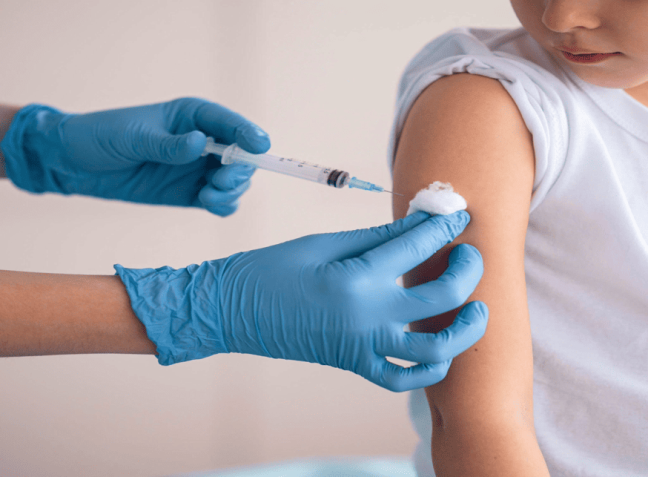
Varicella vaccination is essential for disease prevention in children
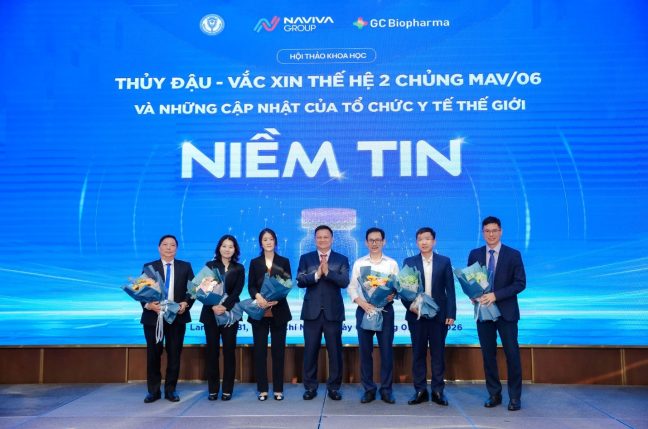
Photo: NAVIVA GROUP
On November 21, 2025, the World Health Organization (WHO) officially included the MAV/06 varicella vaccine strain in its global immunization policy guidance for varicella, recognizing it as equivalent to the Oka strain – the foundation of most currently available varicella vaccines [1].
This marks the first time a strain developed in the Republic of Korea has achieved such recognition, thereby expanding access to high-quality vaccine options, particularly for low- and middle-income countries.
The MAV/06 strain was independently developed by GC Biopharma in the late 1980s and underwent multiple attenuation passages in human embryonic and guinea pig cell lines.
MAV/06 demonstrates strong adaptability to cell culture, low thermosensitivity, and stable attenuation characteristics [2].
Whole-genome sequencing has shown that MAV/06 belongs to clade 2 and is genetically grouped with the Oka strain. The strain shares a comparable genomic structure and contains 42 characteristic single-nucleotide polymorphisms (SNPs) associated with attenuation, ensuring vaccine safety and effectiveness [3].
Vaccines produced from the MAV/06 strain have been evaluated in multinational clinical trials and administered in more than 30 million doses over 30 years in the Republic of Korea and more than 20 countries across Latin America and Asia, including Viet Nam, with no serious adverse events reported [4].
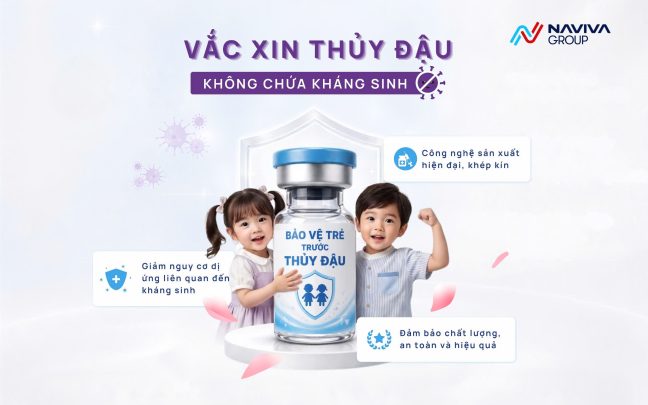
The new-generation varicella vaccine BARYCELA Inj., developed from the MAV/06 strain, is manufactured without the use of antibiotics, further enhancing its safety profile, and has been WHO prequalified (WHO-PQ) since 2023.
Studies have demonstrated that MAV/06 achieves seroconversion rates of 97–100%, with high and durable antibody titers. Phase III clinical trials conducted in the Republic of Korea and Thailand confirmed non-inferior immunogenicity compared with Oka-strain vaccines [5].
Real-world effectiveness data from the Republic of Korea and Latin America indicate a 60–80% reduction in varicella incidence, a 92% reduction in complications, and effectiveness exceeding 98% with a two-dose regimen—comparable to Oka-based vaccines [6,7,8,9].
WHO’s recognition of the MAV/06 strain helps diversify the global varicella vaccine supply, reduce reliance on a single strain, and increase immunization coverage, thereby contributing to improved protection of children worldwide.
BARYCELA Inj., the new-generation varicella vaccine developed by GC Biopharma from the MAV/06 strain, demonstrates immunogenicity and safety comparable to Oka-based vaccines and can be used within current two-dose immunization schedules [10].
In Viet Nam, NAVIVA GROUP is the authorized distributor of the second-generation MAV/06 varicella vaccine, marketed as BARYCELA Inj. (GC Biopharma – Republic of Korea). With more than 21 years of experience in vaccines and medical biological products, NAVIVA GROUP collaborates with healthcare facilities nationwide to enhance access to safe, effective, and high-quality vaccines for the community.
The company is committed to ensuring a stable supply and strict compliance with storage and distribution standards in accordance with GSP/GDP requirements, while actively supporting initiatives to raise awareness of proactive and safe immunization.
📞 Consultation Hotline: 0905 584 666
🌐 Website: www.naviva.com.vn
📧 Email: info@naviva.com.vn
References
- WHO Position Paper on Varicella Vaccines – November 2025.
- Hwang, K. (1992). Marker Test for Attenuation of Varicella-Zoster Viruses Isolated in Korea. Journal of the Korean Society of Virology, 22(2), 105–109.
- Moon, J.Y. et al. (2023). Assessment of Attenuation of Varicella-Zoster Virus Vaccines Based on Genomic Comparison. Journal of Medical Virology, 95.
- Lee, Y.H. et al. (2022). Global Varicella Vaccination Programs. Clinical and Experimental Pediatrics, 65(12), 555–562.
- Choi, U.Y. et al. (2021). Immunogenicity and Safety Profiles of a New MAV/06 Strain Varicella Vaccine in Healthy Children: A Multinational, Multicenter, Randomized, Double-Blinded, Active-Controlled Phase III Study. Vaccine, 39(12), 1758–1764.
- María, L. et al. (2017). Varicella Prevention in Costa Rica: Impact of a One-Dose Universal Vaccination Schedule. Expert Review of Vaccines, 16(3), 229–234.
- Choi, J.-K. et al. (2019). Trends in Varicella and Herpes Zoster Epidemiology Before and After the Implementation of Universal One-Dose Varicella Vaccination in South Korea, 2003–2015. Human Vaccines & Immunotherapeutics, 15(11), 2554–2560.
- Jung, J. et al. (2019). Epidemiological Impact of the Korean National Immunization Program on Varicella Incidence. Journal of Korean Medical Science, 34(7).
- Lee, Y.H. et al. (2023). The Protective Effectiveness of Two-Dose Varicella Vaccination in Children in Korea: A Case-Control Study. Pediatric Infectious Disease Journal, 42(8), 719–722.
- Kang, H.M. et al. (2023). Safety of Interchanging the Live Attenuated MAV/06 Strain and Oka Strain Varicella Vaccines in Children. Vaccines, 11, 1442.
PhD. Pham Thi Phuong Thao – Vaccine Quality Specialist