As the new school year begins, children regularly study, play, and have close contact with one another in group settings. This creates favorable conditions for the spread of infectious diseases, including varicella.
Varicella is caused by the Varicella-zoster virus (VZV) and is highly contagious. According to the CDC, the secondary attack rate can reach 61%–100% among susceptible individuals living in the same household as someone with varicella.[1]
The virus is primarily transmitted through the air or through direct contact with fluid from the blisters. The incubation period ranges from 10–21 days, most commonly 14–16 days. Importantly, an infected person can transmit the virus 1–2 days before the rash appears until all lesions have crusted over, typically around 4–7 days after the rash develops.[1]
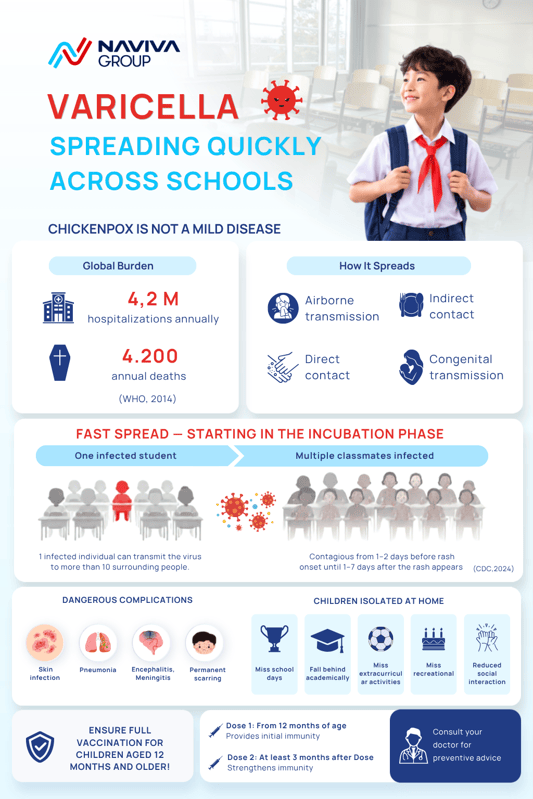
Photo: Chickenpox spreads rapidly in schools; assisted by AI.
A single case can increase the risk of transmission in the classroom
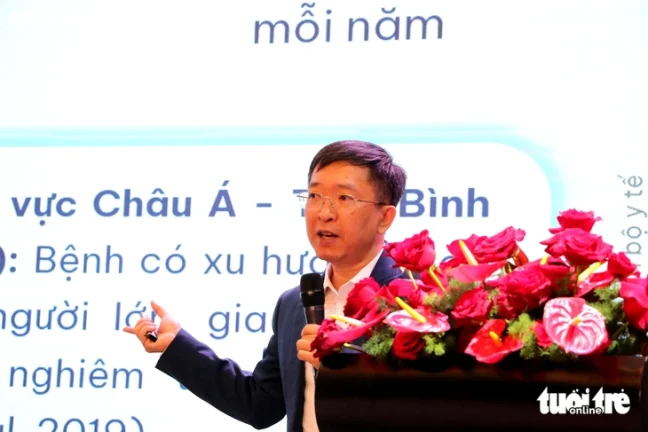
From clinical experience, Dr. Do Thien Hai – Deputy Director of the Center for Tropical Diseases, Vietnam National Children’s Hospital, shared:
“We have encountered cases where a child continued attending school after showing signs of varicella. Within just a few days, several other children in the same class began developing symptoms of varicella and had to stay home from school.”
Because varicella can be transmitted before the typical rash appears, a case that is not detected and managed promptly may increase the risk of transmission within the classroom.
When children develop symptoms such as fever, fatigue, loss of appetite, rash, or blisters, parents should keep them home from school, limit contact with others, notify the school, and take the child to a healthcare facility for medical evaluation.
Varicella can cause complications
Although most healthy children experience a mild course, varicella can still lead to complications such as skin and soft tissue infections, pneumonia, encephalitis, sepsis, or scarring. The risk of complications is higher among young children, immunocompromised individuals, pregnant women, and adults.[1]
The disease can also disrupt children’s education and daily activities, while affecting parents’ work when they need to take time off to care for their children.
Vaccination supports proactive disease prevention
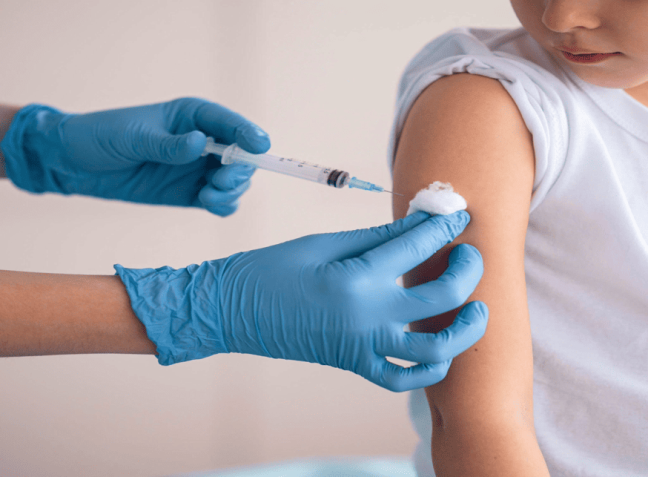
Vaccination is an important measure for preventing varicella, reducing the risk of infection, limiting severe cases, and contributing to the control of transmission within the community.
According to WHO, a 2-dose schedule of varicella-containing vaccine provides higher protection against varicella compared with a single-dose schedule.[2] The appropriate age, number of doses, and interval between doses should follow the approved prescribing information for each vaccine and the guidance of healthcare professionals.
Before children return to school, parents should check their child’s vaccination history and visit a vaccination facility for consultation if the child has not been vaccinated or has not completed the appropriate vaccination schedule.
Proactive vaccination, early recognition of symptoms, and close coordination among families, schools, and healthcare facilities can help protect children and reduce the spread of varicella in the community.
References
[1] CDC – Chapter 17: Varicella, 2024.
[2] WHO Position Paper on Varicella Vaccines, 2025.
NAVIVA GROUP
“Community Health Is Our Happiness.”
Contact Information:
NAM HUNG VIET Vaccine & Biological Products Joint Stock Company
Address: No. 89, Nguyen Thi Thap Street, Him Lam Area, Tan Hung Ward, Ho Chi Minh City
Phone: 028 2223 2425
TUONG KHUE Pharmaceutical Joint Stock Company
Address: 33 Le Lai Street, Hai Chau Ward, Da Nang City
Phone: 0236 3538 666
WINBIO Joint Stock Company
Address: K7TT1 – SH19, Starlake Urban Area, Xuan Dinh Ward, Hanoi Capital
Phone: 024 3795 6789