Meningococcal disease is a dangerous acute infectious disease caused by bacteria transmitted through respiratory droplets during close contact or in crowded living environments. It can progress rapidly and become life-threatening within just 24 hours. Early recognition of suspected symptoms, combined with proactive vaccination, is an effective approach to protecting public health.
1. What is meningococcal disease?
Meningococcal disease is an acute infectious disease caused by Neisseria meningitidis, a Gram-negative diplococcus. The bacterium is classified into multiple serogroups, among which A, B, C, W, X, and Y are the major serogroups responsible for invasive meningococcal disease worldwide [2].
The disease can affect people of all ages, with particular attention needed for young children, adolescents, and individuals with risk factors. It can progress rapidly, causing meningitis, bloodstream infection (meningococcemia), and life-threatening complications within hours [1], [2].
Meningococcal disease situation in Vietnam
According to information from the Ho Chi Minh City Center for Disease Control (HCDC), during the first 14 weeks of 2026, Vietnam recorded 24 cases of meningococcal disease, including four deaths. The number of cases increased by nearly 50% compared with the same period in 2025 [3].
Notably, on October 19, 2026, the Ho Chi Minh City Department of Health reported a cluster of four serogroup B meningococcal disease cases associated with Hai Ba Trung Secondary School in Hiep Phuoc Commune. One case resulted in death, while the other three patients were reported to be in stable condition under treatment [4].
With meningococcal disease being reported in several localities, raising public awareness, recognizing symptoms early, and proactively implementing preventive measures are essential.
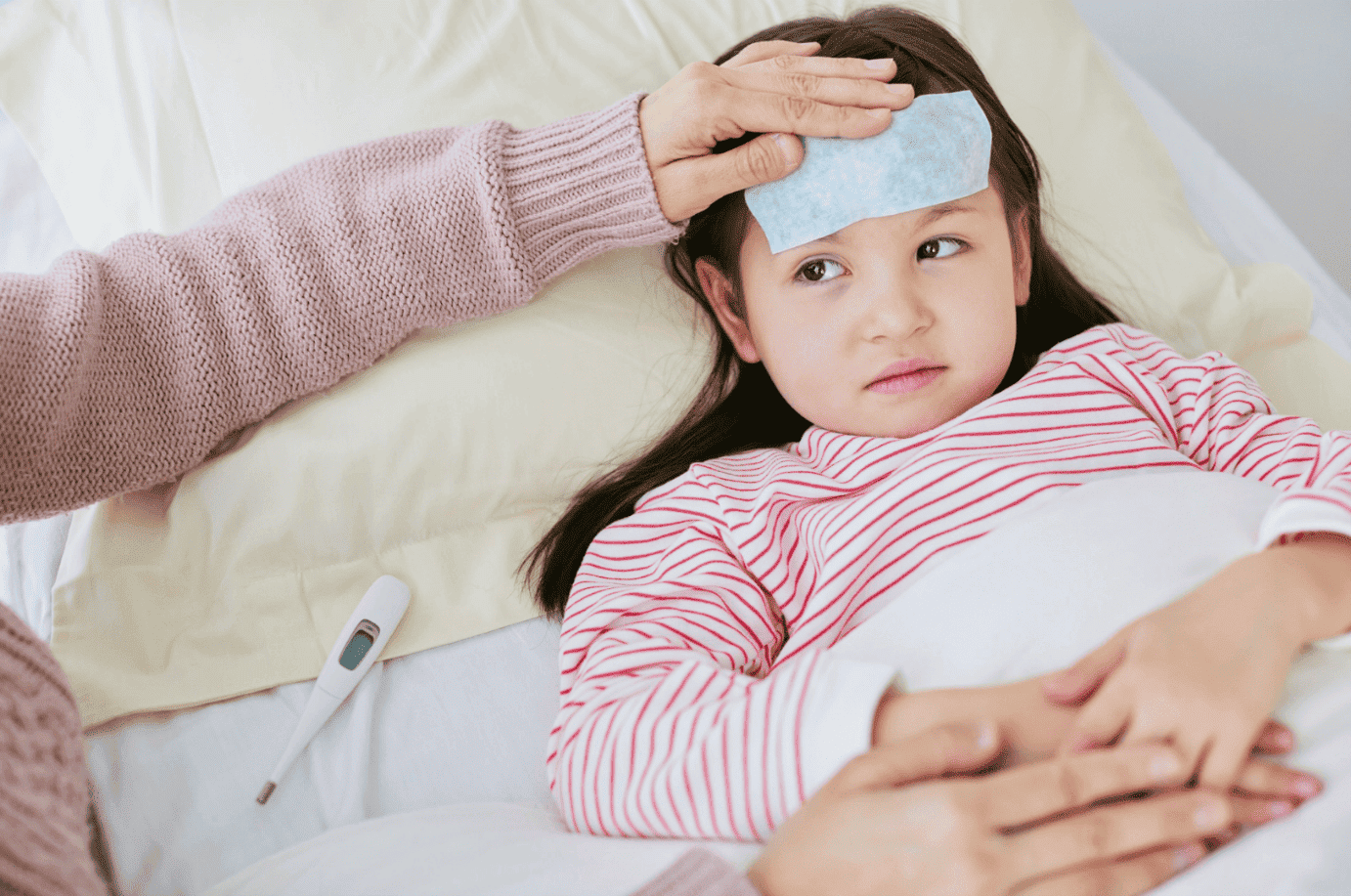
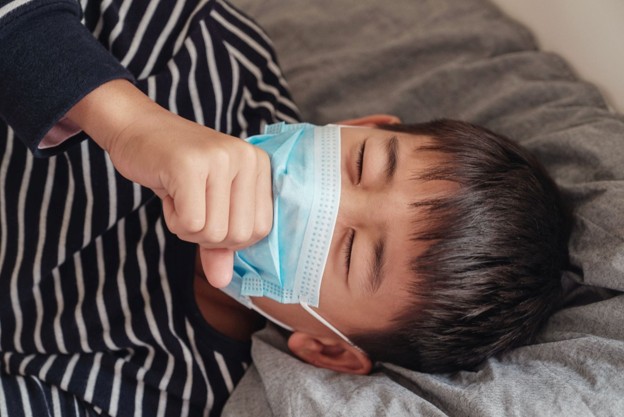
Image: Fever and severe headache
2. How is meningococcal disease transmitted?
Meningococcal disease is transmitted primarily through the respiratory route. The source of infection is not limited to people who are ill; healthy individuals carrying the bacteria without symptoms may also spread the pathogen. Such asymptomatic carriage is estimated to occur in approximately 5–25% of the general population. Although the bacterium is not as easily transmitted as viruses that cause common colds or influenza, the risk of transmission increases in the following circumstances:
- Close contact: The bacteria can spread through respiratory and throat secretions, particularly during kissing or close contact with a person carrying the bacteria.
- Crowded living environments: Schools, dormitories, military barracks, and other settings involving frequent close contact can facilitate transmission [1], [2].
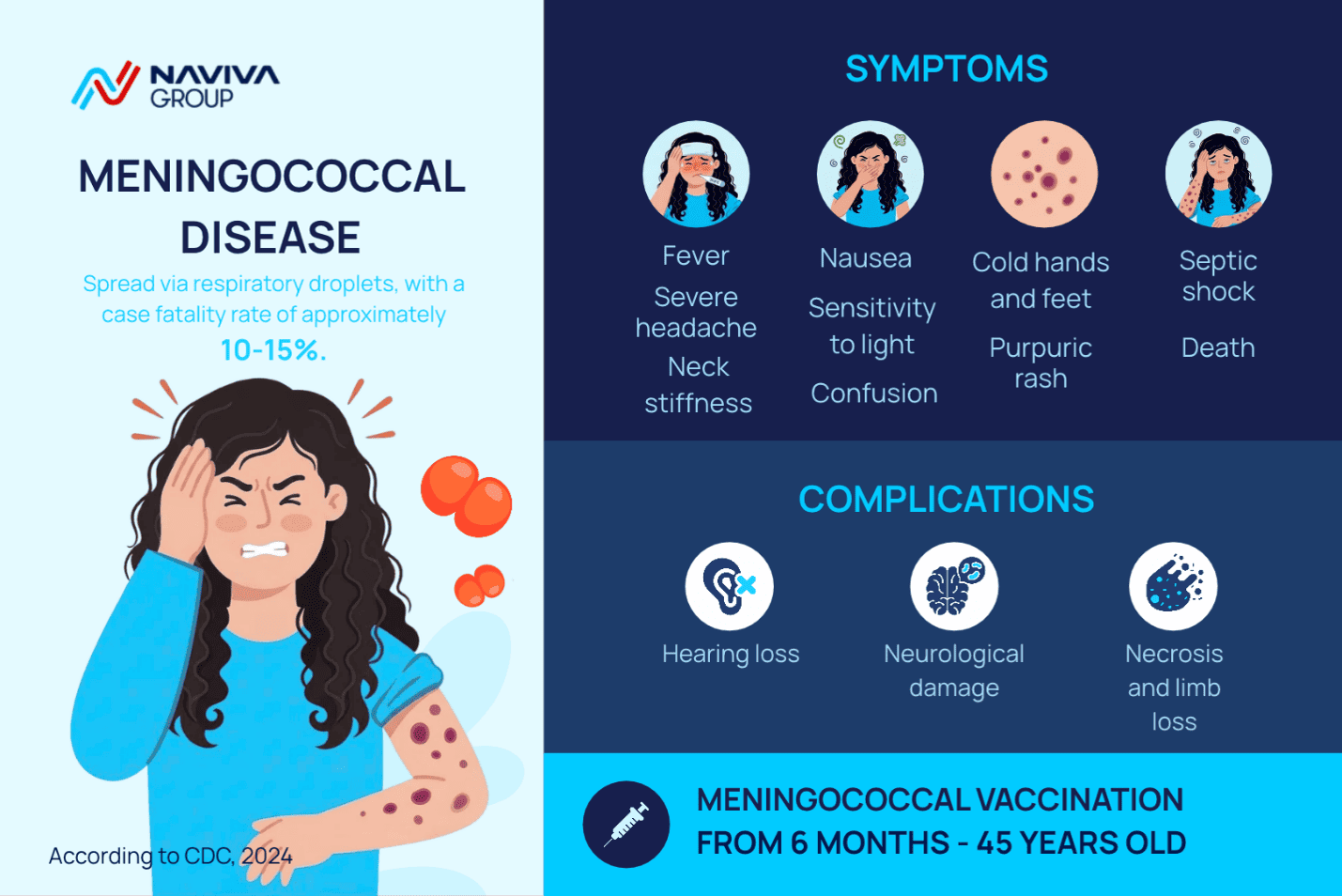
Image: Symptoms and complications of meningococcal disease
3. Symptoms and serious complications of meningococcal disease
In its early stages, meningococcal disease may present with nonspecific symptoms that can easily be mistaken for common infections. After an incubation period of 2-10 days, the disease often begins suddenly with symptoms such as:
- Fever, severe headache, and neck stiffness.
- Nausea, vomiting, sensitivity to light, drowsiness, or confusion.
- Cold hands and feet, rapid breathing, and potentially a purpuric rash or purpura on the skin.
Severe cases may progress to septic shock, multiple organ failure, and death [2], [5].
According to the CDC, even with appropriate antibiotic treatment, the case fatality rate remains approximately 10-15%. Around 10-20% of survivors may experience long-term complications, including hearing loss, neurological damage, or limb loss [2].
Important: If symptoms suggestive of meningococcal disease occur, particularly fever accompanied by severe headache, neck stiffness, altered consciousness, or a purpuric rash, seek immediate medical attention for prompt assessment and treatment. Do not wait for all symptoms to appear before seeking care.
4. Proactive prevention of meningococcal disease through vaccination
Vaccination is an important preventive measure against meningococcal disease caused by the serogroups covered by each vaccine.
Currently available meningococcal vaccines differ in their disease coverage, approved age indications, and vaccination schedules, depending on the specific product.
For serogroups B and C, VA-MENGOC-BC® is a vaccine developed to provide active immunization against disease caused by the corresponding meningococcal serogroups. Distributed through numerous healthcare facilities by NAVIVA GROUP, it offers an additional vaccination option for meningococcal disease prevention, helping meet immunization needs and supporting healthcare facilities in their disease prevention efforts. Its use must comply with the indications, vaccination schedule, and instructions for use approved by the competent authorities [6].
In addition to vaccination, the following preventive measures should be maintained:
- Wash hands regularly and cover the mouth and nose when coughing or sneezing.
- Keep living and learning environments clean and well ventilated.
- Avoid direct contact with the respiratory secretions of infected individuals.
- Monitor health and follow guidance from health authorities when cases occur in the community.
- Close contacts of a confirmed case should be assessed for antibiotic prophylaxis when indicated [1], [2], [3], [4].
Meningococcal disease can be life-threatening within a short period, but timely medical intervention can improve outcomes. To proactively control the risk of outbreaks, close coordination among the healthcare sector, education sector, and families, together with efforts to increase vaccination coverage in the community, plays an important role in protecting public health.
REFERENCES
[1] CDC, About Meningococcal Disease, 2024
[2] CDC, Chapter 8: Meningococcal Disease – Manual for the Surveillance of Vaccine-Preventable Diseases, 2024
[3] HCDC, Bệnh do não mô cầu: Diễn tiến nhanh, hậu quả khó lường, 2026.
[5] CDC, Meningococcal Disease Symptoms and Complications, 2026
[6] Official instructions for use of the VA-MENGOC-BC® vaccine approved in Vietnam. Additional information on the document and its official version must be provided before publication.