On 17 November 2026, the United States officially lost its measles elimination status after 26 years. The return of measles in a country with an advanced health system is a warning of the risk of disease resurgence when vaccination coverage in the community declines. (1)
Measles returns 26 years after elimination
In 2000, the United States was declared to have eliminated measles, marking a major achievement of its immunization programme. This means that endemic measles virus transmission within the country had been interrupted, although imported cases could still occur. (2)
However, more than two decades later, measles has returned, with outbreaks of serious concern.
According to the U.S. Centers for Disease Control and Prevention (CDC), as of 12 November 2026 the country had recorded 5,412 measles cases, compared with only 85 cases in the whole of 2000. This sharp increase in cases highlights the challenges of sustaining gains in measles prevention and control. (2)
On 17 November 2026, the Pan American Health Organization (PAHO/WHO) officially confirmed that the United States had lost its measles elimination status because the same measles virus lineage had been transmitted continuously in the community for at least 12 months. Mexico and Bolivia were also confirmed to have lost this status in the same review, reflecting a worrying measles situation in the Region of the Americas. (1)
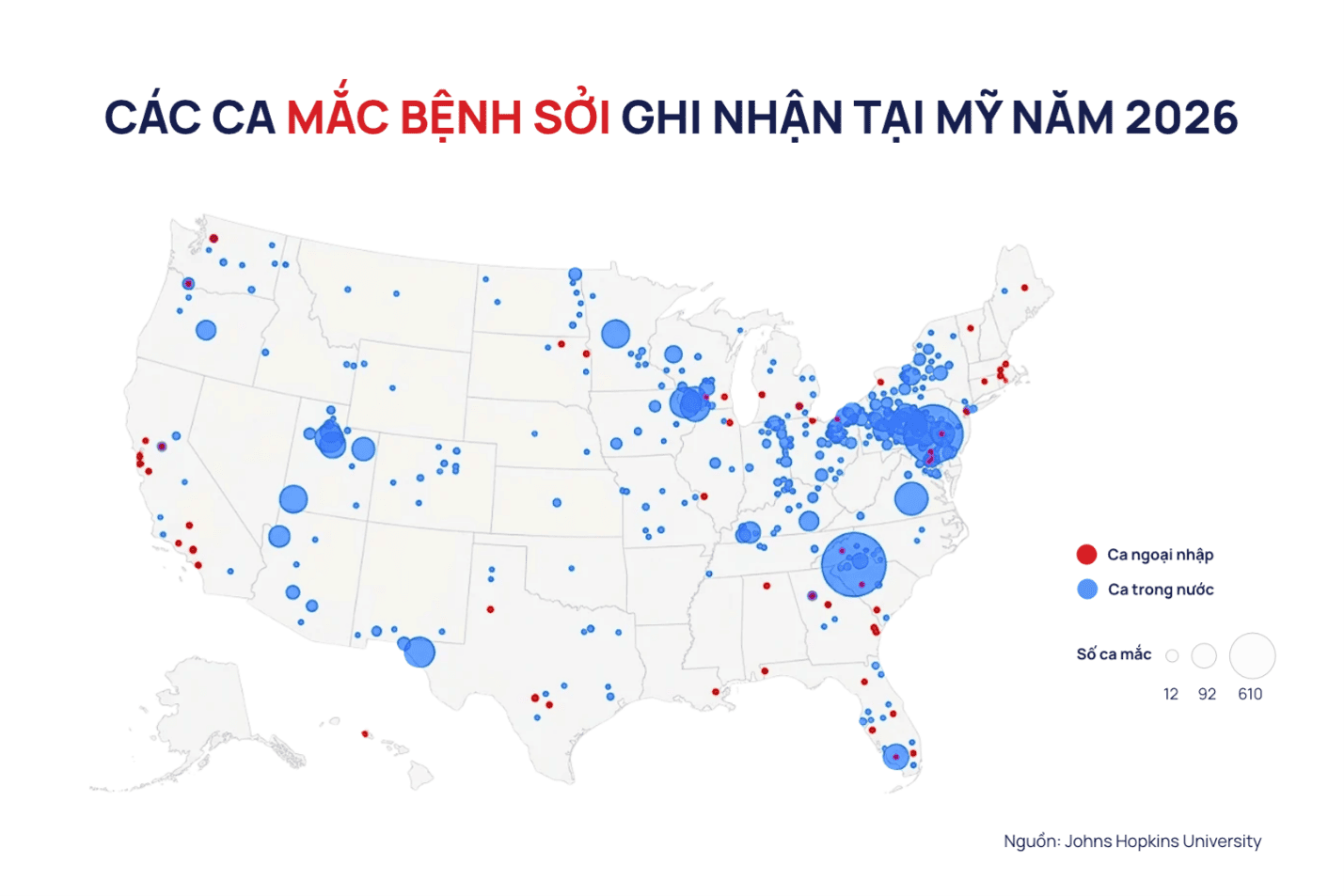
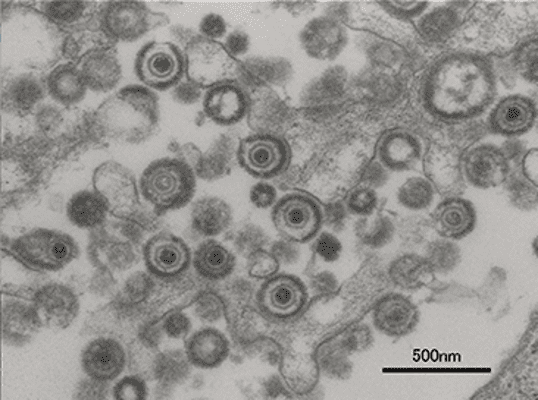
Image: Measles cases reported in the United States in 2026.
Why can measles re-emerge?
Measles is one of the most contagious infectious diseases. According to WHO, one person with measles can infect up to 18 non-immune (susceptible) people under favourable conditions. The measles virus is airborne, spreading when an infected person breathes, coughs or sneezes, and can remain in the air for up to 2 hours. (3)
The disease typically presents with high fever, cough, runny nose (coryza), conjunctivitis and rash. Notably, measles can cause serious complications such as pneumonia, encephalitis and even death, particularly in young children and immunocompromised people. (3)
One of the key factors increasing the risk of measles outbreaks is declining vaccination coverage.
CDC data show that coverage with the measles, mumps and rubella (MMR) combination vaccine among U.S. kindergartners fell from 95.2% in the 2019–2020 school year to 92.4% in the 2025–2026 school year. An estimated 280,000 kindergartners are at risk because they are not fully protected in line with vaccination requirements. (2)
Meanwhile, WHO recommends maintaining at least 95% coverage with two doses of measles-containing vaccine (MCV) in every community to prevent outbreaks. (4)
When vaccination coverage declines, immunity gaps can emerge, allowing measles virus to be introduced and to spread rapidly. The risk is highest in areas with many unvaccinated or under-vaccinated people. (1)
MMR vaccine: proactive protection against three infectious diseases at once
According to WHO, vaccination is a key measure to prevent measles. Maintaining high vaccination coverage not only protects individual health but also helps limit virus transmission in the community. (4)
The combined MMR vaccine induces active immunity against three infectious diseases simultaneously: measles, mumps and rubella.
Among these, the MMR vaccine manufactured by the Serum Institute of India (S.I.I., India) is a live attenuated vaccine containing three attenuated virus components that induce active immunity against all three diseases. (5)
According to a study in children in Brazil, published in Revista Panamericana de Salud Pública (2006), the MMR vaccine (S.I.I.) achieved the following immune response rates, assessed by the presence of antibodies after vaccination (post-vaccination seropositivity): (6)
- 100% for measles
- 5% for mumps
- 6% for rubella
Sustaining vaccination: protecting hard-won gains in disease control
The return of measles in the United States shows that even countries that once successfully controlled an infectious disease can face the risk of resurgence if population immunity is not maintained.
According to PAHO/WHO, losing measles elimination status is not an irreversible failure. Maintaining high vaccination coverage, strengthening epidemiological surveillance, and detecting and responding to outbreaks in a timely manner are key measures to move towards measles elimination again. (1)
Proactively reviewing vaccination history and receiving all doses of measles-containing vaccines on schedule, including the combined MMR vaccine, is a practical way to protect the health of individuals, families and communities.
REFERENCES
(1) PAHO/WHO (17 November 2026). PAHO urges countries to step up efforts to stop measles outbreaks and move towards elimination in the Americas.
(2) CDC (13 November 2026). Measles Cases and Outbreaks.
https://www.cdc.gov/measles/data-research/
(3) WHO (15 July 2026). Measles – Fact Sheet.
https://www.who.int/news-room/fact-sheets/detail/measles
(4) WHO. Measles – Immunization, Vaccines and Biologicals.
https://www.who.int/teams/immunization-vaccines-and-biologicals/diseases/measles
(5) Serum Institute of India. Measles, Mumps and Rubella Vaccine – Product Information. Document hosted by WHO (Vaccine Prequalification).
(6) dos Santos BA, et al. (2006). Prevalence of antibodies against measles, mumps, and rubella before and after vaccination of school-age children with three different triple combined viral vaccines, Rio Grande do Sul, Brazil, 1996. Rev Panam Salud Publica. 20(5):299–306.
https://pubmed.ncbi.nlm.nih.gov/17316487/
Reference information for healthcare professionals. Vaccination should follow the current immunization schedule, indications and professional guidelines.