1. Overview of Measles, Mumps, and Rubella
Measles, mumps, and rubella are three acute infectious diseases caused by different viruses. All three can spread within communities through respiratory droplets, respiratory secretions, or airborne transmission, with outbreaks particularly likely among individuals who lack immunity against these diseases [1], [3], [5].
Although each disease has its own characteristic clinical manifestations, all three can lead to complications. Measles, in particular, can cause pneumonia and encephalitis; mumps can lead to orchitis and meningitis; while rubella poses a risk of serious congenital abnormalities when infection occurs during pregnancy [2], [4], [6].
2. Measles, Mumps, and Rubella: Key Facts to Know
2.1. Measles
Measles is caused by the measles virus (scientific species name: Morbillivirus hominis, belonging to the family Paramyxoviridae). It is transmitted through the air when an infected person breathes, coughs, or sneezes. The virus can remain infectious in the air for up to two hours after an infected person has left the area. According to the CDC, up to 9 out of 10 susceptible individuals who are exposed to an infected person may develop measles [1].
Symptoms typically appear 7–14 days after exposure to the virus. Characteristic signs and symptoms include:
- High fever, cough, and runny nose.
- Red eyes, watery eyes, or conjunctivitis.
- Small white Koplik spots may appear on the inside of the cheeks.
- A red rash that typically begins on the face before spreading downward to the trunk and limbs [1], [2].
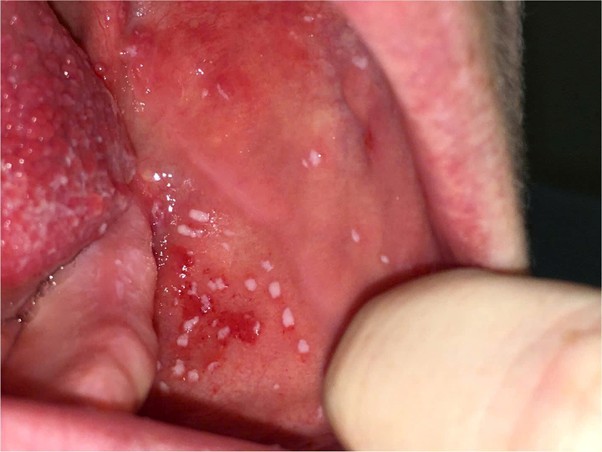
Image: Koplik spots in the mouth of a patient with measles. (Source: AAFP)
Measles can cause more than just fever and rash. It may also lead to complications, including:
- Otitis media and diarrhea.
- Pneumonia and encephalitis.
- Eye damage, visual impairment, or blindness.
- Subacute sclerosing panencephalitis (SSPE), a rare but serious neurological complication.
In addition, measles virus infection can cause immune amnesia, impairing the immune system’s ability to recognize previously encountered pathogens and leaving individuals more susceptible to other infections for an extended period after recovery [1], [2].
2.2. Mumps
Mumps is an infectious disease caused by the mumps virus (scientific species name: Mumps orthorubulavirus, belonging to the family Paramyxoviridae). It primarily affects the salivary glands, particularly the parotid glands.
The virus is transmitted through direct contact with saliva or respiratory droplets released when an infected person coughs, sneezes, talks, or kisses, as well as through sharing objects contaminated with saliva [3].
The incubation period is typically 16–18 days, although it can range from 12 to 25 days.
Common signs and symptoms include:
- Fever, headache, fatigue, muscle aches, and loss of appetite.
- Painful swelling of one or both parotid glands, causing enlargement of the cheeks and jaw area.
- Pain when chewing or swallowing [3], [4].
Mumps can lead to complications, including:
- Orchitis (inflammation of the testicles), particularly in males after puberty.
- Oophoritis (inflammation of the ovaries) or mastitis (inflammation of the breast tissue).
- Meningitis and encephalitis.
- Pancreatitis.
- Hearing impairment, with permanent hearing loss occurring in rare cases [4].
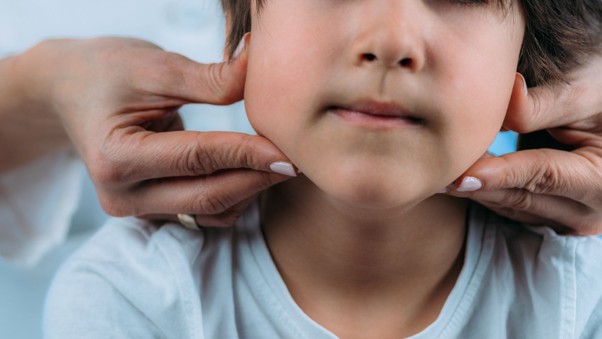
Image: Illustration of a child with mumps.
2.3. Rubella
Rubella is an infectious disease caused by the rubella virus (belonging to the family Matonaviridae) transmitted primarily through respiratory secretions when an infected person coughs or sneezes. According to the CDC, approximately 25–50% of individuals infected with rubella do not develop noticeable symptoms but can still transmit the virus to others [5].
Common signs and symptoms include:
- Mild fever, fatigue, and sore throat.
- Swollen lymph nodes behind the ears, at the back of the head, or in the neck.
- A pinkish-red maculopapular rash that typically begins on the face and spreads throughout the body, usually lasting approximately three days.
- Joint pain or arthritis, which occurs more frequently in adult women.
According to the CDC, up to 70% of adult women with rubella may experience joint pain or arthritis [5], [6].
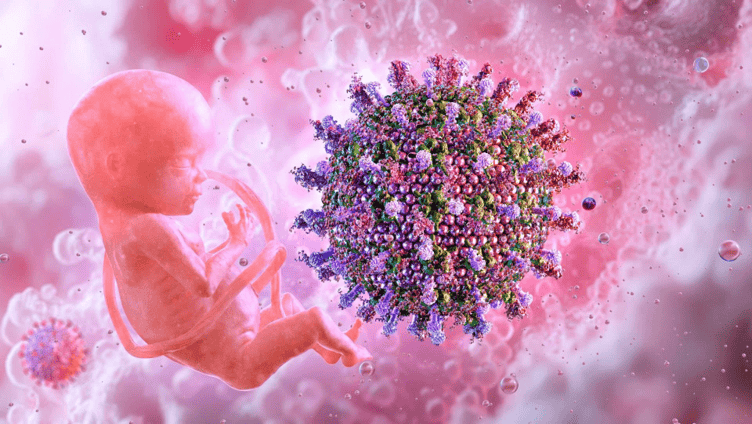
Image: Complications of rubella. (Source: CDC)
Serious Complication: Congenital Rubella Syndrome (CRS)
Rubella poses a particularly serious risk to pregnant women, especially during the first trimester.
According to the World Health Organization (WHO), maternal rubella infection occurring from just before conception through the first 8–10 weeks of pregnancy can result in multiple congenital abnormalities in up to 90% of affected pregnancies [7].
Rubella infection during pregnancy can lead to miscarriage, stillbirth, or congenital rubella syndrome (CRS), which may result in:
- Deafness or hearing impairment.
- Eye abnormalities, including congenital cataracts.
- Congenital heart defects.
- Developmental delays and neurological damage.
Infants with congenital rubella syndrome may continue to shed the virus through bodily secretions for an extended period, sometimes for one year or longer [7], [8].
3. Proactive Prevention of Measles, Mumps, and Rubella Through the Measles, Mumps, and Rubella (MMR) Live Attenuated Vaccine
Vaccination is a safe and effective measure for inducing active immunity against measles, mumps, and rubella.
The MMR vaccine is a combination vaccine containing live attenuated measles, mumps, and rubella viruses. It stimulates the body to develop an immune response against all three diseases.
According to the recommended vaccination schedule (*):
- Dose 1: At 12–15 months of age.
- Dose 2: At 4–6 years of age (**).
(*) This schedule applies to children who have previously received a monovalent measles vaccine at 9 months of age.
(**) The second dose (booster dose) may be administered at any time, provided that at least 4 weeks have elapsed since the first dose (or any previously administered live vaccine dose).

Image: Proactive MMR Vaccination
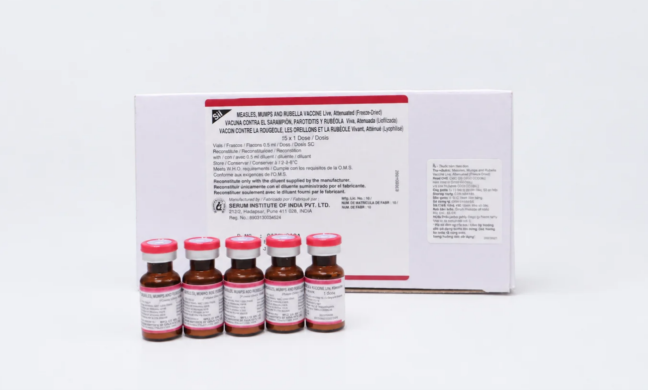
Currently, the combined MMR vaccine, TRESIVAC, manufactured by the Serum Institute of India (SII), imported by Company Limited for Vaccines and Biologicals No. 1, and distributed by NAVIVA GROUP, helps induce active immunity against measles, mumps, and rubella simultaneously.
Parents should proactively review their children’s vaccination records and take them to vaccination facilities for pre-vaccination screening and consultation on an appropriate MMR vaccination schedule, thereby contributing to the prevention of measles, mumps, and rubella.
References:
[1] CDC. About Measles. 2026
[2] WHO. Measles – Fact Sheet. 2026
[3] CDC. About Mumps. 2025