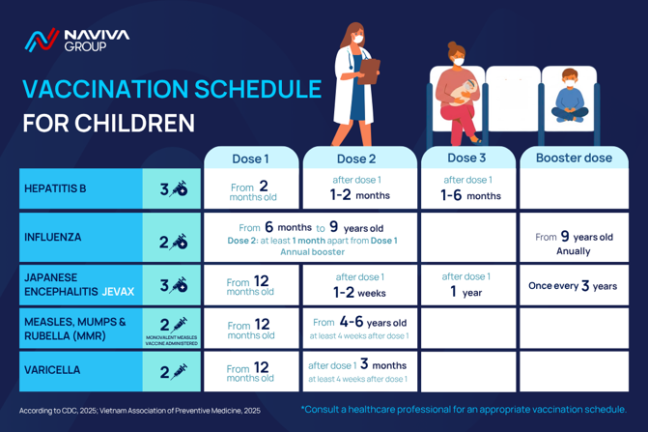
Hepatitis B is an acute or chronic infectious disease caused by the hepatitis B virus (HBV), which directly attacks and damages liver cells. Notably, many people with the infection do not experience obvious symptoms for a long time. When the infection becomes chronic, the virus can cause progressive liver damage, increasing the risk of cirrhosis and liver cancer. [1] [4]
According to World Health Organization (WHO), approximately 240 million people worldwide were living with chronic hepatitis B in 2024, with an estimated 1.1 million deaths associated with the disease, primarily due to cirrhosis and primary liver cancer. Hepatitis B remains a major public health concern, and vaccination is one of the effective measures for preventing the disease. [4]
1. Routes of hepatitis B transmission
The hepatitis B virus (HBV) is transmitted when the blood or bodily fluids of an infected person enter the body of an uninfected person through three main routes:
- Mother-to-child transmission during childbirth.
- Sexual transmission through unprotected sexual contact.
- Bloodborne transmission, such as sharing needles or using shared instruments that may cause cuts or abrasions.
Because most HBV infections do not cause obvious clinical symptoms, infected individuals may unknowingly transmit the virus to others. Therefore, proactive prevention, vaccination, and testing when at risk play important roles in detecting and controlling the disease. [1] [4]
2. Risks and complications of hepatitis B
Hepatitis B virus infection can cause acute illness or progress to chronic infection.
In some cases, acute hepatitis B may cause symptoms such as fatigue, nausea, vomiting, abdominal pain, dark urine, or jaundice (yellowing of the skin and eyes). However, most infected people, particularly adults, have no obvious clinical symptoms or experience only vague symptoms. [1] [4]
In chronic hepatitis B infection, the virus can continue to damage the liver over an extended period. If the disease is not detected and appropriately managed, it may progress to cirrhosis or liver cancer and become life-threatening. [4]
The risk of developing chronic hepatitis B is particularly high when infection occurs during infancy or early childhood. This is one reason why WHO emphasizes prioritizing vaccination for newborns and children to reduce the risk of chronic HBV infection in the community. [4]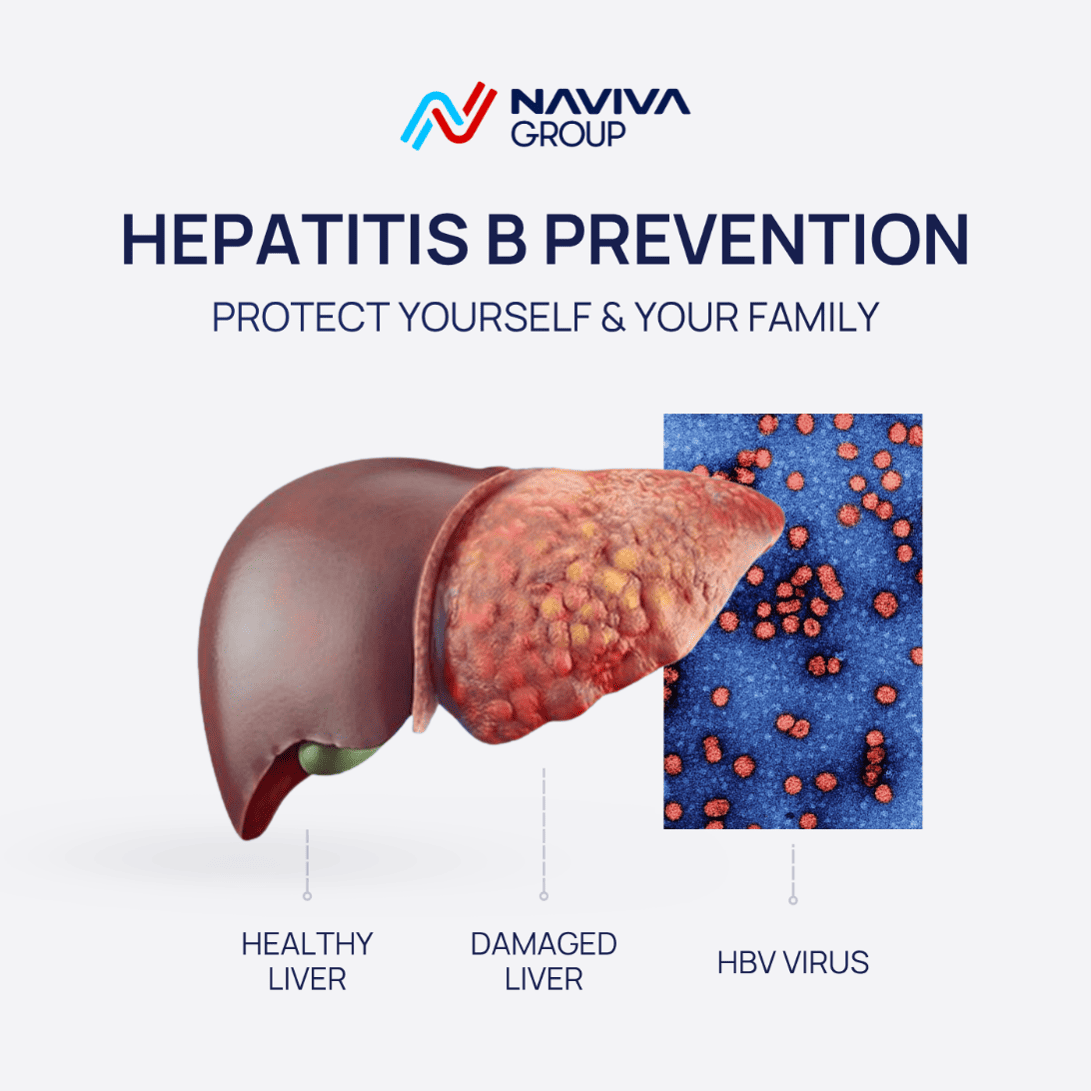
Image: Hepatitis B prevention
3. GENE-HBVAX vaccination: Proactive immunization against hepatitis B
Vaccination is an important proactive measure for preventing hepatitis B. WHO states that hepatitis B vaccines are safe, effective, and capable of providing long-term protection. The CDC also identifies vaccination as an effective way to prevent hepatitis B infection. [1] [4]
GENE-HBVAX is a hepatitis B vaccine used to provide active immunization against the disease in children from birth onward and adults, particularly those at increased risk of hepatitis B virus (HBV) infection. At-risk groups include healthcare workers and people who frequently come into contact with blood, laboratory personnel, people with family members who have hepatitis B, individuals who require regular blood transfusions or hemodialysis, and other groups as determined by healthcare professionals. [3]

Image: GENE-HBVAX recombinant hepatitis B vaccine
Depending on individual needs and vaccination plans, GENE-HBVAX can be administered according to either of the following two primary schedules:
Schedule 1
- Dose 1: At the first vaccination visit.
- Dose 2: One month after Dose 1.
- Dose 3: Two months after Dose 1.
- Booster dose: One year after Dose 1.
Schedule 2
- Dose 1: At the first vaccination visit.
- Dose 2: One month after Dose 1.
- Dose 3: Six months after Dose 1.
- Booster dose: Five years after Dose 1. [3]
The appropriate vaccination schedule should be selected for each individual and followed under the guidance of a healthcare professional, taking into account age, health status, exposure risk, and vaccination history. [2]
To reduce the risk of infection, everyone should take precautions in daily life: avoid sharing razors or toothbrushes, practice safer sex, and ensure proper sterilization when undergoing tattooing, piercing, or other procedures involving potential blood exposure.
Alongside measures to prevent transmission, vaccination is one of the proactive ways to prevent hepatitis B. GENE-HBVAX, a recombinant hepatitis B vaccine distributed by NAVIVA GROUP, offers an additional vaccination option at a reasonable price, helping expand access to vaccination and supporting communities in taking proactive steps to protect their health against the risk of hepatitis B. [3]
References
[1] Centers for Disease Control and Prevention (CDC), Hepatitis B Basics; Hepatitis B Vaccine, 2025.
[2] Vietnam Association of Preventive Medicine, Recommendations on Vaccination Schedules for Adults, 2020.
[3] NAVIVA GROUP, GENE-HBVAX: Recombinant Hepatitis B Vaccine.
[4] World Health Organization (WHO), Hepatitis B, 2026.
Disclaimer: This article is intended for informational purposes regarding hepatitis B and its vaccine. Vaccination should be preceded by medical screening and consultation with a healthcare professional.
NAVIVA GROUP
“Community health is our happiness!”