
World Rabies Day (September 28, 2026) carries the message “Stronger Together,” highlighting the importance of close collaboration among local communities, veterinarians, governments, healthcare workers, educators, and global partners. By working together across society, we can move closer to the goal of zero human deaths from rabies by 2030. [1] [2]
In Vietnam, from 2022 to 2025, an average of 77 deaths from rabies were recorded each year. Approximately 400,000 people require post-exposure prophylaxis (PEP) after being bitten by dogs or cats, with the annual cost of rabies vaccines estimated at more than VND 300 billion. As of September 20, 2026, Vietnam had recorded 54 rabies-related deaths across 21 of the country’s 34 provinces and centrally governed cities. [3] In response to this situation, local authorities have urged relevant departments, agencies, and local governments to urgently and rigorously implement rabies prevention and control measures, thoroughly contain and eliminate outbreaks, and minimize the risk of transmission among animals and from animals to humans. [4]
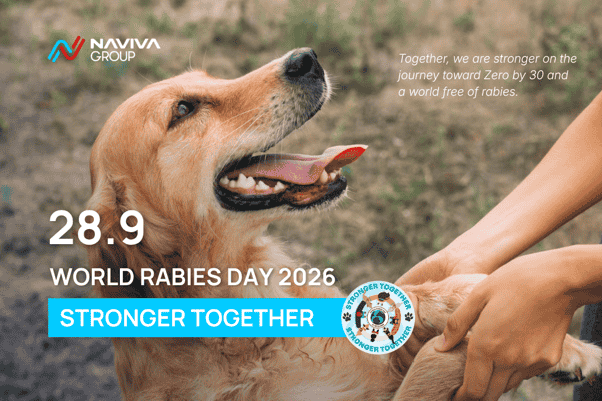 Image: NAVIVA Group joins the global observance of World Rabies Day 2026.
Rabies remain a serious threat to human life
Rabies is an infectious viral disease transmitted from animals to humans that causes severe damage to the central nervous system. The virus is primarily transmitted through the saliva of infected animals, most commonly via bites or scratches, or when saliva comes into contact with mucous membranes or broken skin. Rabies can be prevented through vaccination and appropriate post-exposure prophylaxis (PEP). However, once the virus reaches the central nervous system and clinical symptoms appear, the disease is almost 100% fatal. [5]
Initially, the disease may present with fever, pain, and abnormal or unexplained sensations of numbness, tingling, or burning at the site of the bite. As the disease progresses, patients develop severe neurological symptoms that manifest in two main forms:
- Furious rabies: This form causes agitation, confusion, hydrophobia, aerophobia, excessive salivation, seizures, or paralysis, eventually leading to death within a few days due to cardiac or respiratory arrest.
- Paralytic rabies: This form accounts for approximately 20% of human rabies cases. It progresses less severely and generally lasts longer than the furious form. Muscles around the site of the wound gradually become paralyzed. The patient develops a slowly progressing coma, eventually resulting in death. This form is more difficult to diagnose and may therefore be underreported. [5]
Rabies prevention starts with responsible pet management
Vaccinating pets is a cost-effective measure to interrupt transmission from animals to humans. [5]. This is also at the core of the “One Health” approach, which connects human, animal, and environmental health, as promoted by the World Health Organization. [6].
Dog and cat owners should follow these safety principles:
- Ensure that dogs and cats receive complete and regular rabies vaccinations.
- Properly manage pets and do not allow dogs to roam freely. When taking dogs to public places, they should be supervised and appropriate safety measures should be taken.
- Do not allow children to tease, approach, or play with unfamiliar dogs or cats.
- If a dog or cat shows unusual signs, such as abnormal aggression, behavioral changes, excessive salivation, neurological symptoms, illness, or unexplained death, do not attempt to approach, capture, or handle the animal yourself. Instead, notify local authorities or relevant veterinary professionals for guidance. [4]
Immediate steps to take after being bitten by a dog or a cat
Immediately after being bitten or scratched by an animal suspected of having rabies, urgent first aid should be provided to help prevent the virus from reaching the central nervous system:
Wash the wound immediately with soap and clean running water for approximately 15 minutes, then disinfect it with an appropriate antiseptic solution. Do not close or tightly bandage the wound unless instructed by a healthcare professional.
Seek medical attention immediately at a healthcare facility or vaccination center for a rabies exposure risk assessment and advice on rabies vaccination and rabies immunoglobulin when indicated.
Do not underestimate even small bites or scratches. Do not assume that there is no risk simply because the animal is a “pet dog” or has been kept for many years. The need for rabies vaccination and rabies immunoglobulin should be assessed and determined by a healthcare professional on a case-by-case basis.
Never self-treat or use herbal remedies, traditional medicines, folk remedies, or other alternative methods as substitutes for rabies vaccination and recommended post-exposure preventive measures. Delaying vaccination may result in the loss of an opportunity to prevent the disease and can be life-threatening. [4]
Working together toward the goal of zero human deaths from rabies by 2030
Rabies prevention and control requires coordinated efforts among the health sector, veterinary services, local authorities, and proactive action from every individual:
- Every vaccination dose given to dogs and cats helps reduce the risk of rabies transmission in the community.
- Proper wound washing helps minimize the amount of virus entering the body.
- Seek medical attention immediately for timely assessment and treatment.
- Proactively notify local authorities if you identify an animal suspected of having rabies.
Let us take action today to protect ourselves and our families and work toward a Vietnam where no one dies from rabies!
References:
[1] WHO, World Rabies Day 2026, 2026
[2] WHO, Zero by 30: the global strategic plan to end human deaths from dog-mediated rabies by 2030, 2018
[3] CDC Hà Nội, Hà Nội mít tinh hưởng ứng Ngày Thế giới phòng, chống bệnh Dại năm 2026, 2026
[4] KSBT Đà Nẵng, Hưởng ứng ngày Thế giới phòng, chống bệnh dại, 2026
[5] WHO, Rabies, 2026
[6] WHO, One Health, 2026
[7] CDC, Human Rabies Prevention – United States, 2008
NAVIVA GROUP
“Community Health Is Our Happiness.”