According to the World Health Organization (WHO) and the U.S. Centers for Disease Control and Prevention (CDC), receiving vaccinations at the recommended times not only protects children against dangerous infectious diseases but also helps optimize the immune response at each stage of development. With a wide range of vaccines available, how can parents make sure they do not miss their child’s “optimal vaccination window”?
Below is a summary of vaccination schedules for five important vaccines: Hepatitis B, Influenza, Japanese Encephalitis, Measles-Mumps-Rubella (MMR), and Varicella, which parents should be aware of to proactively provide comprehensive protection for their children during the early years of life.
1. Hepatitis B vaccine
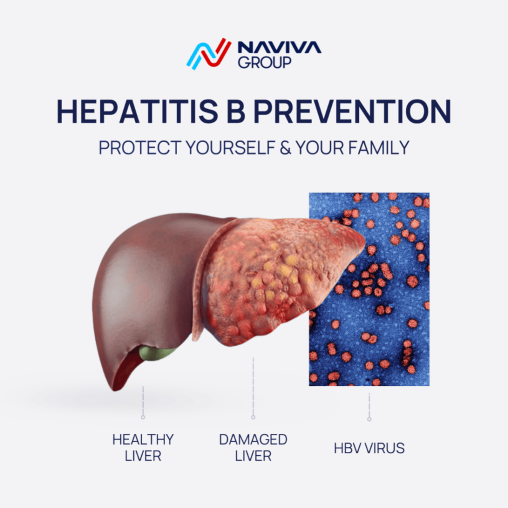
Hepatitis B virus (HBV) infection is a liver infection caused by a virus transmitted through blood or bodily fluids, which can lead to cirrhosis or liver cancer. The risk of chronic HBV infection varies depending on the age at which a person becomes infected and is highest among young children. Approximately 90% of infants infected with HBV and 30% of children aged 1–5 years infected with HBV will develop chronic HBV infection. [1]
Basic 3-dose hepatitis B vaccination schedule:
- Dose 1: from 2 months old
- Dose 2: 1-2 months after dose 1
- Dose 3: 1-6 months after dose 1
People having hepatitis B can still transmit HBV to others even when they have no clinical symptoms. The best way to prevent the disease is to complete full vaccine series to help body develop optimal immunity. [2]
2. Influenza vaccine requires annual booster doses
Influenza is a respiratory illness caused by a virus. It can lead to serious complications in young children, such as pneumonia or otitis media, with children under 5 years old being at higher risk [4]. Seasonal influenza vaccination is particularly important for children, as it helps prevent influenza and reduces the risk of hospitalization or death if they become infected.
Influenza vaccination schedule:
- Children aged 6 months to under 9 years who are receiving influenza vaccination for the first time: 2 doses administered at least 4 weeks apart. Thereafter, 1 booster dose annually.
- Children from 9 years old (and adults): 1 dose if receiving influenza vaccination for the first time, followed by 1 booster dose annually. [3]
Children aged 9 years old should receive influenza vaccination every season. September and October are appropriate times for vaccination to ensure the best protection against influenza [4].
3. Japanese encephalitis vaccine
Japanese encephalitis is a viral infection of the brain transmitted to humans through the bite of infected mosquitoes, primarily mosquitoes of the genus Culex, which are prevalent in Asia and parts of the Western Pacific. It is a potentially severe disease. Approximately 20-30% of people who develop clinical disease die, while 30-50% of survivors experience long-term neurological sequelae. There is currently no specific treatment for the disease [5].
Vaccination schedule for JEVAX:
- Dose 1: from 12 months old
- Dose 2: 1–2 weeks after dose 1
- Dose 3: 1 year after dose 1
- Booster dose: once every 3 years to maintain immunity [3]
Japanese encephalitis transmission can occur year-round, with peak transmission occurring from May to October, particularly in northern Viet Nam [5]. A booster dose should be administered once every 3 years to maintain immunity. In endemic areas, a booster dose should be administered annually. [6]
4. Measles, mumps, and rubella (MMR) vaccine
Measles, mumps, and rubella are all respiratory infectious diseases that can cause serious complications, such as encephalitis, pneumonia, or hearing loss. Among the three diseases, measles is the most contagious; approximately 1 in every 1,000 children with measles develops encephalitis [7]. Rubella can cause congenital abnormalities in the fetus if a woman becomes infected during pregnancy. In addition to causing swelling of the parotid glands, mumps can also cause orchitis, particularly in males after puberty, potentially leading to testicular atrophy or reduced fertility. [8]
Basic vaccination schedule for children who have previously received a monovalent measles vaccine:
- Dose 1: from 12 months old
- Dose 2: from 4–6 years old (at least 4 weeks apart) [9]
Not only young children, but also adolescents and adults should receive the recommended number of MMR vaccine doses. MMR vaccination is particularly important for healthcare professionals, international travelers, and certain other specific groups.
5. Varicella vaccine
Varicella is a disease caused by the varicella-zoster virus (VZV) and is transmitted through respiratory droplets and direct contact with fluid from the characteristic vesicular rash. The risk of transmission to non-immune individuals can be as high as 90% following close contact [10]. Therefore, when a case of varicella occurs in an environment with many young children, the risk of transmission is an important concern for parents.
Varicella vaccination schedule consists of 2 doses:
- Dose 1: from 12 months old
- Dose 2: 3 months after dose 1 (at least 4 weeks apart) [9]
The best way to prevent varicella is through vaccination. Everyone, including children, adolescents, and adults, should receive 2 doses of varicella vaccine if they have never had varicella or have never been vaccinated against the disease. [10]
Full and timely vaccination helps achieve optimal protection
Receiving all recommended vaccinations on schedule is one of the safest and most effective ways to prevent disease, helping proactively protect children and their families against serious vaccine-preventable diseases.
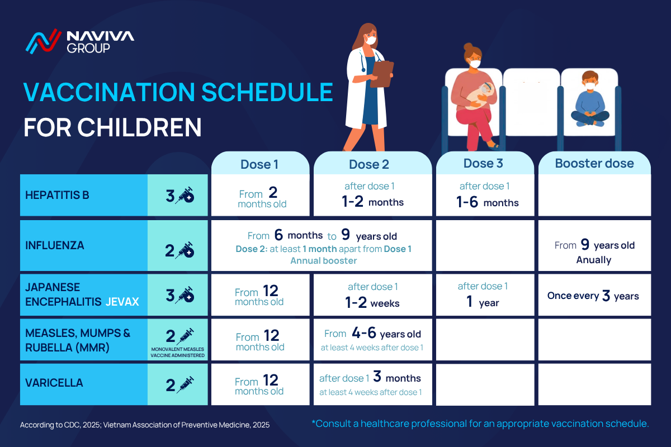
Photo: Vaccination schedule for children
The vaccination schedules above apply to children who receive their vaccinations on time, starting from the first dose. In practice, vaccination schedules may vary depending on the age at which vaccination is initiated and the number of doses the child has previously received, with the minimum interval between doses differing from the basic vaccination schedule. Therefore, parents should bring their child’s vaccination record or immunization card whenever visiting a healthcare facility so that healthcare professionals can provide guidance on an appropriate vaccination schedule.
References:
[1] CDC, Hepatitis B, 2025.
[2] CDC, Hepatitis B Basics, 2025.
[3] Hội YHDP, Lịch tiêm chủng Vắc xin, 2025.
[4] CDC, Flu and Children, 2025.
[5] CDC, Symptoms of Japanese Encephalitis, 2026.
[6] CDC, Japanese Encephalitis, 2026.
[7] CDC, Measles Symptoms and Complications, 2026.
[8] CDC, Measles, Mumps, Rubella (MMR) Vaccine Safety, 2024.
[9] Hội YHDP, “Khuyến cáo lịch tiêm chủng cho mọi lứa tuổi ở Việt Nam”, 2026.